
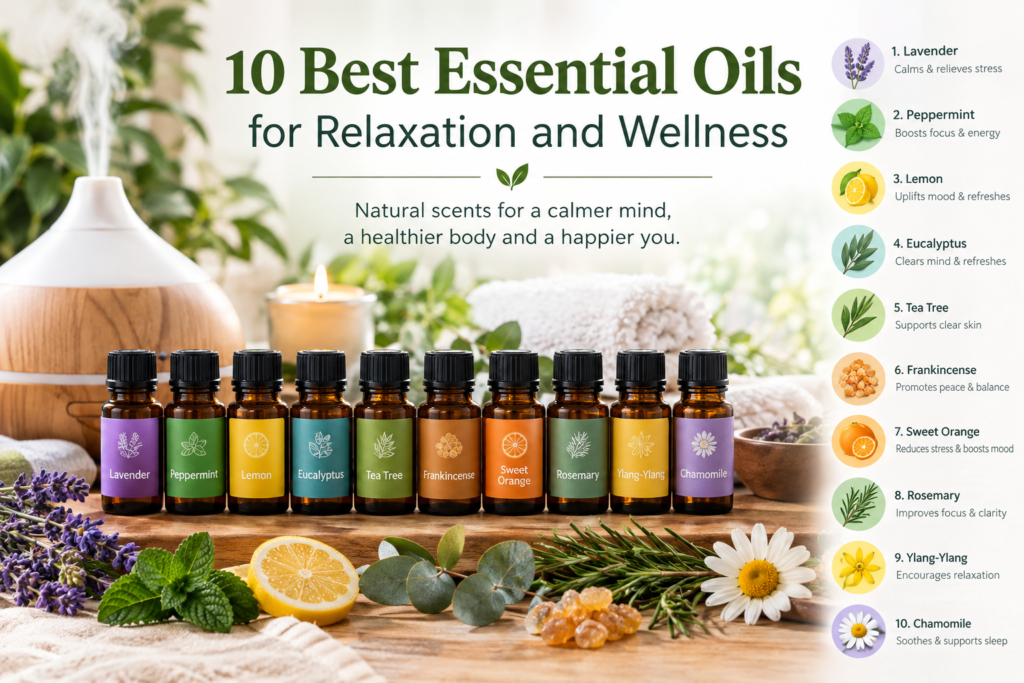
Modern life can often feel busy and overwhelming. Work, screen time, travel, household responsibilities, and daily commitments can leave little room for relaxation. Many people are therefore exploring simple ways to create a more peaceful and refreshing environment at home. Aromatherapy is one such approach, using plant-based fragrances as part of personal wellness and relaxation routines.
Among the many natural aromatic products available today, essential oils are particularly popular. These concentrated plant extracts are valued for their distinctive aromas and can be incorporated into diffusers, personal inhalation routines, massage preparations, and other appropriate applications.
From the gentle floral aroma of lavender to the refreshing character of peppermint, different oils offer very different sensory experiences. However, choosing the right oil can be confusing for beginners.
This guide explores ten popular options, their aromas, common uses, and important safety considerations so you can build a simple aromatherapy routine that suits your lifestyle.
1. Lavender Oil
Lavender is one of the most recognizable aromas in aromatherapy. Its soft, floral, slightly herbaceous fragrance is commonly associated with calm and relaxation.
Many people enjoy lavender in an evening routine. It can be diffused in a bedroom or used in a properly diluted personal-care preparation. Its gentle aroma also works well with other fragrances, making it a popular ingredient in blends.
For beginners, lavender is often an easy starting point because its scent is familiar and versatile. It can complement activities such as reading, meditation, gentle stretching, or simply taking a few quiet moments before bedtime.
When using essential oils topically, lavender should still be diluted appropriately rather than applied directly to the skin without guidance.
2. Peppermint Oil
Peppermint has a completely different character from lavender. Its cool, minty, crisp aroma is often chosen when people want a fresh and invigorating sensory experience.
Peppermint can be particularly appealing during daytime routines. Its strong fragrance may help create a refreshing atmosphere in a workspace or living area when appropriately diffused.
Because peppermint has a powerful aroma, beginners should start with a small amount rather than assuming that more product will provide a better experience.
Peppermint also requires additional caution around young children and pets. Always check reliable safety information before using it in a household where children or animals are present.
3. Lemon Oil
Lemon provides a bright, fresh citrus aroma that can make an environment feel clean and cheerful. Its fragrance is commonly used in household products, personal-care products, and aromatherapy blends.
A few appropriately used drops in a diffuser can create a refreshing atmosphere. Lemon also combines well with other citrus and herbal aromas.
People often choose lemon for morning routines, workspaces, or areas where they want a crisp fragrance.
However, citrus oils require particular attention when used on the skin. Some citrus oils can cause photosensitivity depending on how they are produced and used. Always follow the supplier’s instructions and appropriate safety guidance.
4. Eucalyptus Oil
Eucalyptus has a strong, fresh, camphor-like aroma. It is widely recognized for its distinctive scent and is frequently included in aromatic products.
Its clean fragrance can be suitable for refreshing a room or creating a spa-like atmosphere at home. Some people enjoy eucalyptus during showers or in diffusers designed for aromatic use.
Because eucalyptus is highly concentrated and has a strong aroma, careful usage is important. It should not be treated as a universal remedy for respiratory or other medical problems.
Parents should be especially cautious because eucalyptus products may not be appropriate for young children. Always check age-specific safety recommendations before use.
5. Tea Tree Oil
Tea tree has a sharp, herbal, medicinal-like aroma. It is particularly well known in personal-care and cosmetic products.
Unlike sweeter floral or citrus fragrances, tea tree provides a more earthy and herbaceous sensory profile. It is commonly used in appropriately formulated skincare products and aromatic blends.
Tea tree should be diluted properly before topical use. Applying concentrated oil directly to the skin can cause irritation or sensitization in some individuals.
It is also important to remember that tea tree oil is toxic if swallowed and should be stored securely away from children and pets.
When selecting essential oils, understanding their individual characteristics is more important than simply choosing the most popular products.
6. Frankincense Oil
Frankincense has a warm, resinous, woody, and slightly spicy aroma. It has a long history of use in traditional aromatic and cultural practices.
Today, many people appreciate frankincense for meditation, mindfulness, and quiet evening routines. Its deeper aroma can create a peaceful and sophisticated atmosphere.
Frankincense also blends well with floral, citrus, and woody scents. A small amount can add depth to a homemade aromatic blend.
As with other concentrated botanical extracts, appropriate dilution and safe storage are essential when using frankincense.
7. Sweet Orange Oil
Sweet orange is another popular citrus option. Its fragrance is sweet, cheerful, fruity, and refreshing.
It can work particularly well in daytime spaces such as living rooms, offices, and kitchens. Sweet orange is also a popular choice for seasonal and festive blends.
Its pleasant fragrance makes it approachable for people who are new to aromatherapy and may not enjoy strong herbal or medicinal aromas.
When using orange oil topically, always check the specific product’s safety instructions because citrus oils can have different phototoxicity profiles depending on their extraction and formulation.
8. Rosemary Oil
Rosemary has a fresh, herbaceous, slightly woody aroma. It is a familiar culinary herb, but its aromatic extract is also commonly used in personal-care and fragrance applications.
Its crisp herbal scent can be suitable for daytime environments. Some people enjoy rosemary aroma while working, reading, or completing creative activities.
Rosemary can also be combined with citrus or mint aromas to create fresh blends.
However, fragrance preference should not be confused with medical effectiveness. Claims that rosemary or other essential oils can treat health conditions should be evaluated carefully and supported by appropriate evidence.
9. Ylang-Ylang Oil
Ylang-ylang is known for its rich, sweet, floral aroma. It is commonly used in perfumes and aromatic blends.
Because the fragrance can be quite intense, only a small amount may be needed when creating a blend. It can pair nicely with lighter citrus aromas or softer floral scents.
Ylang-ylang may appeal to people who prefer luxurious, floral fragrances rather than fresh or herbal aromas.
As with all concentrated aromatic products, beginners should follow proper dilution recommendations when using ylang-ylang on the skin.
10. Chamomile Oil
Chamomile is associated with a soft, sweet, herbaceous floral aroma. It is often selected for relaxing evening rituals and gentle personal-care routines.
Chamomile can be blended with lavender or other softer fragrances to create a calming aromatic environment.
There are different types of chamomile, and their chemical profiles can differ. Therefore, checking the botanical name and product information is important when purchasing chamomile products.
People with allergies to plants in the daisy or Asteraceae family should exercise additional caution and seek professional advice before use.
How to Choose the Right Oil
With so many options available, choosing your first bottle can seem difficult. The simplest approach is to start with the aroma you genuinely enjoy.
If you prefer floral fragrances, lavender or ylang-ylang may appeal to you. If you enjoy fresh scents, peppermint, eucalyptus, lemon, or rosemary could be worth exploring. For warm and deeper aromas, frankincense may be more suitable.
There is no requirement to purchase ten bottles immediately. Start with one or two products and learn how they fit into your routine.
When purchasing essential oils, look for transparent labeling. A quality product should generally provide information such as the botanical name, plant part, extraction method, origin where available, batch information, and recommended usage.
How to Use Essential Oils Safely
Aromatherapy can be enjoyable, but concentrated plant extracts require responsible handling.
Diffusion
Diffusion is one of the easiest ways to introduce an aroma into a room. Follow the diffuser manufacturer’s instructions and use only the recommended amount.
Avoid continuously diffusing strong aromas for extended periods. Good ventilation and moderation are important.
Topical Application
Most concentrated oils should be diluted with a suitable carrier oil before topical application.
Common carrier oils include jojoba, coconut, sweet almond, and grapeseed oil. The appropriate dilution depends on the oil, intended application, age, and individual circumstances.
A patch test can help identify potential skin irritation, although it cannot guarantee that a reaction will not occur.
Inhalation
Personal inhalation can provide a convenient way to enjoy an aroma without applying it to the skin. Use an appropriate inhalation method and avoid placing concentrated products directly inside the nose.
Important Safety Considerations
Natural does not automatically mean harmless. Essential oils contain concentrated aromatic compounds and can cause irritation, allergic reactions, or other adverse effects when used incorrectly.
Never assume that an oil is safe to swallow. Internal use should only be considered under appropriate professional guidance.
Keep bottles away from children and pets. Some oils can be particularly dangerous if ingested by animals or young children.
Pregnant individuals, people with asthma or allergies, and those taking medications should consult a qualified healthcare professional before incorporating aromatherapy into their routine.
If you experience skin irritation, swelling, difficulty breathing, dizziness, or another concerning reaction, stop using the product and seek appropriate medical assistance.
Creating a Relaxing Aromatherapy Routine
A wellness routine does not need to be complicated. You can choose one fragrance for the morning and another for the evening.
For example, a bright citrus aroma may complement a morning routine, while lavender can be incorporated into a quiet nighttime ritual.
Try pairing aromatherapy with activities such as:
- Meditation
- Reading
- Gentle stretching
- Yoga
- Deep breathing
- Journaling
- A warm bath
- Quiet music
The goal is to create a consistent environment that encourages you to slow down and focus on the present moment.
Combining Different Oils
Blending fragrances can be an enjoyable part of aromatherapy. However, beginners should keep blends simple.
A floral oil can be paired with a citrus oil, while a woody oil can be combined with a fresh herbal aroma. Start with small quantities and record the combinations you enjoy.
Remember that a pleasant scent is highly personal. A blend that one person loves may not appeal to another.
When experimenting with essential oils, avoid creating complicated formulas until you understand the characteristics and safety considerations of individual oils.
Storage Tips
Proper storage helps protect aromatic products from heat, light, and air.
Keep bottles tightly closed and store them in a cool, dark place. Avoid leaving them near windows, radiators, or other heat sources.
Dark-colored glass bottles are commonly used for aromatic oils because they help reduce exposure to light.
Always keep products in their original labeled containers and away from children and pets.
Final Thoughts
Aromatherapy can be a simple and enjoyable addition to a balanced wellness routine. From floral lavender and sweet orange to refreshing peppermint and deep frankincense, each fragrance offers a different sensory experience.
The best approach is to explore gradually and focus on safe, responsible use. Choose clearly labeled products, follow dilution recommendations, and avoid treating aromatherapy as a replacement for medical care.
Whether you are looking for a refreshing daytime aroma or a peaceful evening fragrance, the world of essential oils offers many options to explore.
Start with one or two scents that genuinely appeal to you, learn how to use them safely, and gradually develop a routine that fits your lifestyle. With the right approach, aromatherapy can become a pleasant part of everyday self-care.