
Essential Oils for Skin
Essential oils are widely used as aromatic ingredients in skincare, personal-care and cosmetic formulations. Oils such as lavender, tea tree, rosemary, peppermint, eucalyptus and lemongrass can be incorporated into different products depending on their aroma characteristics and intended application.
If you are looking for essential oils for skin care, it is important to understand that essential oils are highly concentrated materials. They should be appropriately diluted and used according to the requirements of the finished product.
From facial oils and body oils to soaps, scrubs and cosmetic formulations, the right essential oil depends on the product you are developing, its intended use and the desired fragrance profile.
Read More
Using Essential Oils in Skin Care
Essential oils may be used as aromatic ingredients in a variety of skincare and personal-care products.
Common applications include:
Facial oils
Body oils
Massage oils
Soaps
Body scrubs
Bath products
Skin-care creams
Lotions
Cosmetic formulations
Natural personal-care products
The suitability of an essential oil can vary depending on its concentration, formulation and method of application.
Popular Essential Oils for Skin
Different essential oils offer different aroma profiles and formulation characteristics.
Some commonly used options include:
| Essential Oil | Aroma Profile | Common Product Applications |
|---|---|---|
| Lavender | Floral, herbaceous | Skincare, soaps, bath products |
| Tea Tree | Fresh, herbal | Personal-care products, soaps |
| Rosemary | Fresh, herbal | Cosmetic and personal-care products |
| Peppermint | Fresh, minty | Body-care and aromatic products |
| Eucalyptus | Strong, fresh | Soaps, bath and personal-care products |
| Lemongrass | Citrus, herbal | Soaps, cosmetics, body products |
| Lemon | Fresh, citrus | Cosmetic and fragrance products |
| Orange | Sweet, citrus | Body-care and fragrance products |
This table describes common formulation and aroma applications rather than guaranteed skin benefits.
Lavender Essential Oil for Skin
Lavender essential oil is known for its floral and herbaceous aroma and is commonly used in cosmetic and personal-care products.
It can be considered for:
Facial-care formulations
Body oils
Soaps
Bath products
Massage oils
Body-care products
Lavender is also frequently selected when a softer floral fragrance is desired in a skincare formulation.
For topical use, appropriate dilution should be considered before incorporating lavender essential oil into a product.
Tea Tree Essential Oil for Skin
Tea tree essential oil has a distinctive fresh and herbal aroma and is commonly used in personal-care and cosmetic formulations.
It may be incorporated into products such as:
Facial-care products
Soaps
Cleansing formulations
Body-care products
Scalp and personal-care products
Tea tree essential oil is concentrated, so the appropriate concentration should be determined according to the finished product and intended application.
Rosemary Essential Oil for Skin
Rosemary essential oil provides a fresh, herbal aroma and is used in various cosmetic and personal-care formulations.
It may be considered for:
Body oils
Soaps
Massage oils
Cosmetic products
Personal-care formulations
When developing a skincare product, rosemary essential oil should be evaluated as part of the complete formulation rather than as an isolated ingredient.
Peppermint Essential Oil for Skin
Peppermint essential oil has a strong, fresh and minty aroma.
It can be used in selected personal-care formulations where a fresh aromatic character is desired.
Potential applications include:
Body-care products
Massage oils
Soaps
Bath products
Aromatic cosmetic formulations
Because peppermint essential oil is concentrated, appropriate dilution and product-specific safety information are important for topical applications.
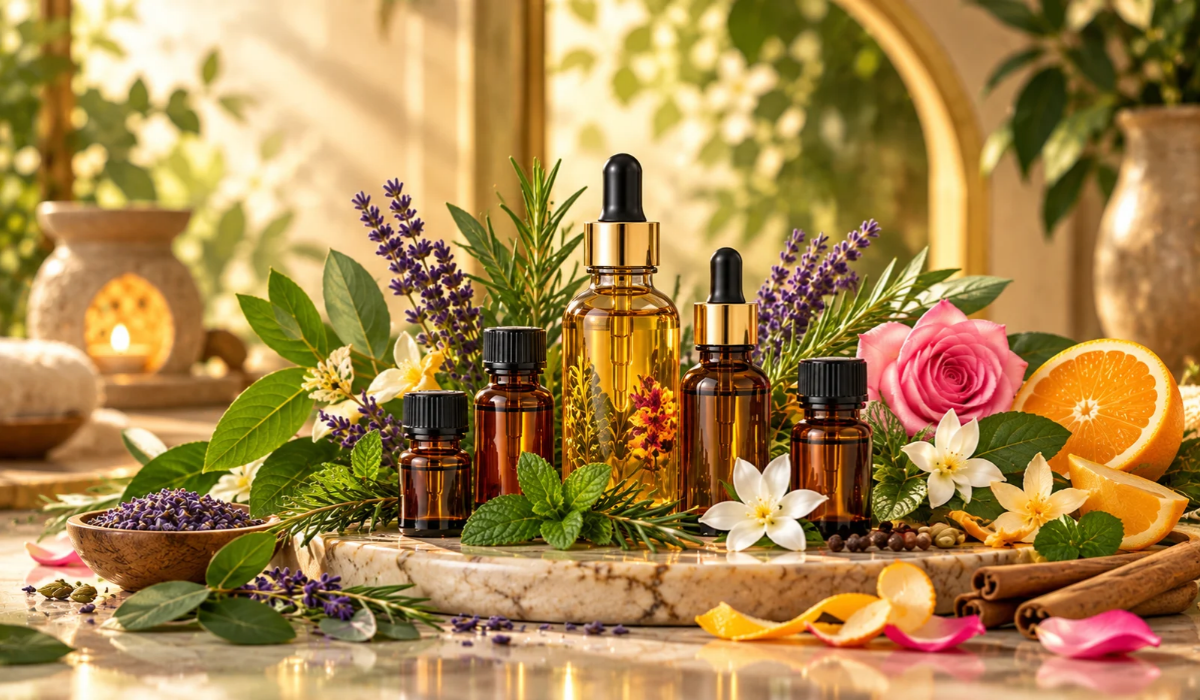
Essential Oils for Different Skin-Care Applications
The best essential oil depends largely on what you are making.
Facial Care
Essential oils may be incorporated into facial oils and other cosmetic formulations when appropriately formulated.
For facial products, formulation concentration and skin sensitivity should be considered carefully.
Body Care
Body oils, massage products, soaps and scrubs may incorporate essential oils as aromatic ingredients.
The larger application area makes it particularly important to use an appropriate concentration throughout the finished product.
Read More
Bath Products
Lavender, eucalyptus, peppermint and other aromatic oils may be used in bath-related formulations.
The essential oil should be properly incorporated into the finished product rather than added directly to bath water in concentrated form.
Soap Making
Essential oils are commonly used to provide fragrance in handmade and commercial soaps.
Popular choices include lavender, tea tree, peppermint, eucalyptus, lemongrass and citrus oils.
Soap makers should check appropriate usage levels and safety information for every essential oil used.
Essential Oils for Dry Skin
If you are developing products intended for dry-skin routines, essential oils should generally be considered as aromatic ingredients rather than automatically assuming that they provide moisturising properties.
The moisturising characteristics of a skincare product primarily depend on the complete formulation and ingredients such as appropriate carrier oils, emollients and other cosmetic ingredients.
Essential oils can be selected according to the desired fragrance profile while the overall product is formulated for its intended skin type.
Essential Oils for Oily Skin
Products designed for oily skin should be formulated according to the characteristics of the complete product.
Essential oils such as tea tree, rosemary or citrus oils may be selected for their aromatic properties in certain cosmetic formulations.
However, an essential oil should not automatically be considered a treatment for excess oil or a skin condition.
If a product is intended for acne-prone or problematic skin, appropriate cosmetic formulation and professional guidance may be required.
Essential Oils for Sensitive Skin
Sensitive skin requires additional care when introducing fragranced ingredients.
Essential oils can cause irritation or sensitivity in some individuals, particularly when used at inappropriate concentrations.
For products intended for sensitive skin:
Use appropriate dilution.
Review the safety information for each oil.
Consider fragrance sensitivity.
Test the complete formulation appropriately.
Avoid applying concentrated essential oils directly to the skin.
A skincare product should be evaluated as a complete formulation rather than assuming that an individual essential oil will be suitable for everyone.
Essential Oils for Face
Essential oils may be included in facial oils and cosmetic formulations, but facial skin can be more sensitive than other areas of the body.
When developing facial products, consider:
Essential oil concentration
Complete formulation
Skin sensitivity
Intended frequency of use
Product compatibility
Applicable cosmetic requirements
Avoid applying undiluted essential oils directly to the face.
Essential Oils for Body Care
Essential oils are commonly used in body-care products for their aromatic characteristics.
They may be incorporated into:
Body oils
Massage oils
Body scrubs
Bath products
Soaps
Lotions
Personal-care products
The final concentration should be appropriate for the product and its intended application.
Essential Oil Blends for Skin Care
A combination of essential oils can be used to create a specific fragrance profile.
For example, floral, citrus, herbal, fresh or woody oils can be combined according to the desired aroma.
Common oils considered for skincare blends include:
Lavender
Tea tree
Rosemary
Peppermint
Lemon
Orange
Eucalyptus
Lemongrass
When creating a blend, prepare a small test batch first and document the proportions of each ingredient.
Essential Oils and Carrier Oils
Carrier oils are commonly used as the base for topical oil formulations, while essential oils are added in much smaller quantities.
Common carrier oils include:
Coconut oil
Jojoba oil
Sweet almond oil
Argan oil
Sesame oil
The carrier oil and essential oil serve different purposes within a formulation.
A topical product should be formulated according to the intended use, with an appropriate concentration of essential oil.
How to Choose Essential Oils for Skin
Choosing an essential oil should begin with the product rather than simply the name of the oil.
Consider the Application
Decide whether the oil is required for:
Facial care
Body care
Soap
Massage oil
Bath products
Scrubs
Cosmetic formulation
Consider the Aroma
Choose between floral, citrus, herbal, fresh, minty or woody fragrance profiles according to your product concept.
Check the Product Information
Before purchasing, review available information such as:
Botanical name
Plant part
Extraction method
Origin
Aroma profile
Batch information
Storage requirements
Safety information
Consider the Final Formula
The essential oil should be evaluated together with the other ingredients in the finished product.
Essential Oils for Natural Skin-Care Products
Essential oils are frequently used in products marketed around natural or botanical skincare.
They may be found in:
Botanical face oils
Body oils
Natural soaps
Bath products
Body scrubs
Massage oils
Aromatic personal-care products
However, natural ingredients still require appropriate formulation and safety considerations.
Natural origin does not mean that an essential oil can automatically be used undiluted or that it is suitable for every skin type.
Essential Oils for Cosmetic Manufacturers
Cosmetic manufacturers may purchase essential oils as aromatic ingredients for different product formulations.
Potential applications include:
Facial products
Body-care products
Hair-care products
Soaps
Scrubs
Massage products
Bath products
Personal-care formulations
Commercial buyers should provide the intended application when making an enquiry so that relevant product information can be discussed.
Bulk Essential Oils for Skin-Care Products
Businesses producing skincare and personal-care products may require essential oils in larger quantities.
Bulk requirements may depend on:
Essential oil type
Required quantity
Packaging
Intended application
Product specifications
Production requirements
Storage capacity
If you are sourcing essential oils for commercial skincare production, provide the oil required, approximate quantity and intended application when contacting us.
Essential Oil Price for Skin Care
Essential oil prices vary according to the individual oil and its specifications.
Factors may include:
Type of essential oil
Botanical source
Extraction method
Availability
Quantity
Packaging
Origin where provided
Product specifications
There is no single price for all essential oils used in skincare.
For current pricing, contact us with the specific essential oil and quantity you require.
What to Check Before Buying Essential Oils for Skin
If you are purchasing essential oils for skincare or cosmetic production, consider the available product information.
Depending on the oil, this may include:
Botanical identity
Plant part used
Extraction method
Aroma profile
Country or region of origin
Batch details
Packaging
Storage recommendations
Safety information
Available documentation
These details can help businesses select products according to their formulation requirements.
Essential Oil Storage
Proper storage can help maintain the quality of essential oils.
Keep containers:
Tightly closed
Away from direct sunlight
Protected from excessive heat
Protected from moisture
Away from unnecessary air exposure
Storage requirements can vary according to the individual oil and packaging.
Follow the product-specific storage information supplied with the product.
Important Safety Information
Essential oils are concentrated aromatic materials and should be handled responsibly.
For skin-care applications:
Do not apply essential oils directly to the skin in concentrated form.
Use an appropriate dilution for topical applications.
Keep essential oils away from the eyes and sensitive areas.
Review the safety information for each individual oil.
Test the complete formulation appropriately before wider use.
Store essential oils away from children and pets.
Do not assume that a natural ingredient is automatically safe for every person.
Follow applicable cosmetic regulations when manufacturing commercial products.
Some essential oils may have additional application-specific precautions. Always consider the individual oil and its intended use.
Essential Oils for Skin vs Carrier Oils
Essential oils and carrier oils are not interchangeable.
Essential oils are concentrated aromatic extracts used in relatively small amounts.
Carrier oils are generally used as the base of topical oil products and help create a suitable medium for incorporating essential oils.
For example, a skincare oil may contain a carrier oil as its primary ingredient with a carefully selected amount of essential oil added for fragrance.
The final formulation should be developed according to the intended product and application.
Frequently Asked Questions About Essential Oils for Skin
What are essential oils for skin?
Essential oils for skin are concentrated aromatic oils that may be incorporated into cosmetic, personal-care, soap, bath and body-care formulations.
Which essential oils are commonly used for skin care?
Lavender, tea tree, rosemary, peppermint, eucalyptus, lemongrass, lemon and orange are among the essential oils commonly used in skincare and personal-care formulations.
Can I apply essential oil directly to my skin?
Essential oils are concentrated and should not automatically be applied directly to the skin. Appropriate dilution and product-specific safety guidance should be followed.
Which essential oil is commonly used in skincare?
Lavender and tea tree are commonly used in personal-care and cosmetic formulations, while rosemary, peppermint and citrus oils are also used in various products.
Can essential oils be used on the face?
Essential oils may be incorporated into facial-care formulations, but facial skin can be sensitive. Appropriate dilution and formulation practices are important.
Can essential oils be used for dry skin?
Essential oils may be included as aromatic ingredients in products formulated for dry-skin routines. The moisturising properties of the finished product depend on its complete formulation.
Are essential oils suitable for sensitive skin?
Some people may be sensitive to fragranced ingredients, including essential oils. Products intended for sensitive skin should be formulated and tested carefully.
Can essential oils be mixed with carrier oils?
Yes. Essential oils are commonly incorporated into carrier oils for topical formulations. The appropriate essential oil concentration depends on the intended application.
Can essential oils be used in face oils?
Essential oils can be incorporated into facial oil formulations when appropriately formulated and diluted. Undiluted essential oils should not automatically be applied directly to the face.
Can essential oils be used in soap?
Yes. Essential oils are widely used as aromatic ingredients in handmade and commercial soap. Appropriate usage levels and safety information should be checked for each oil.
Can I buy essential oils for skin care in India?
Yes. You can explore the available essential oils and contact BuyEssentialOils.in with your required product, quantity and intended application.
Can businesses buy essential oils for skincare in bulk?
Businesses can enquire about essential oils for commercial skincare and cosmetic applications. Bulk availability, packaging and pricing depend on the specific product and requirement.
What information should I provide when buying essential oils for skincare?
Provide the essential oil required, approximate quantity, intended application, preferred packaging and delivery location. Additional product documentation requirements can also be mentioned.
Buy Essential Oils for Skin Care
Whether you are developing skincare products, making soaps, preparing body oils or sourcing ingredients for commercial cosmetic production, choosing the right essential oil starts with understanding your application.