
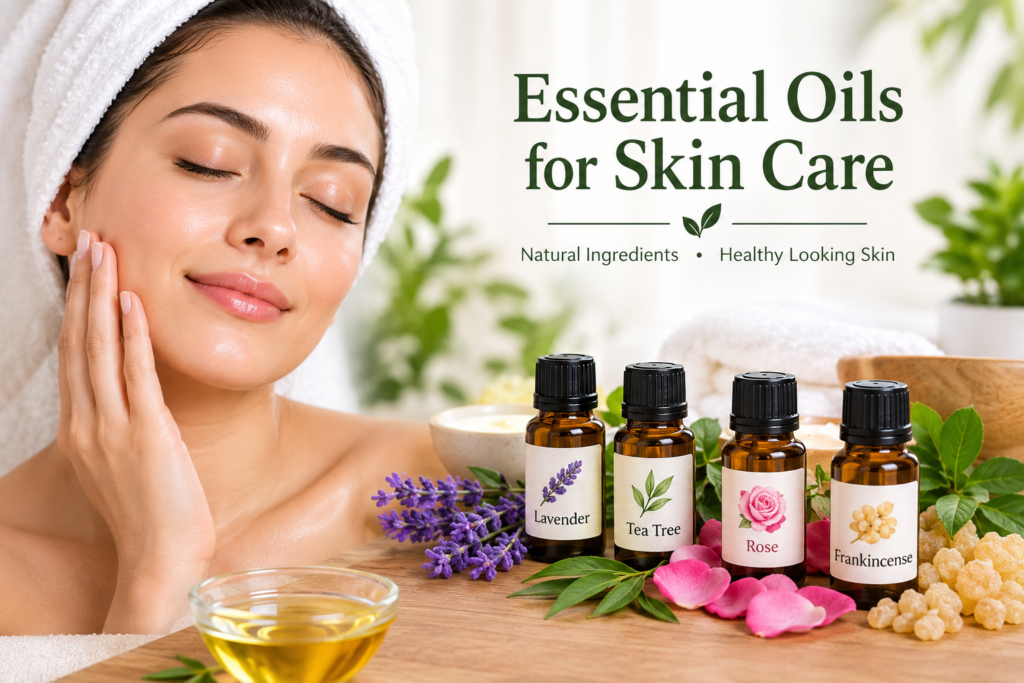
Essential oils are widely used in natural beauty, personal-care products, and fragrance routines. Their concentrated aromas make them popular ingredients in facial oils, body products, massage blends, soaps, and other cosmetic formulations.
Lavender, tea tree, rose, frankincense, chamomile, and other essential oils are often included in skincare products. However, essential oils are highly concentrated, so they should be used carefully and appropriately diluted for topical applications.
A good skincare routine should also consider your skin type, sensitivity, cleansing habits, moisturizing, and sun protection. Essential oils can be one part of a cosmetic routine, but they should not be treated as a replacement for professional treatment of skin conditions.
What Are Essential Oils for Skin Care?
Essential oils are concentrated aromatic extracts obtained from plants. They can come from flowers, leaves, fruit peels, roots, seeds, bark, or other plant parts.
Popular essential oils used in cosmetic formulations include:
- Lavender essential oil
- Tea tree essential oil
- Rose essential oil
- Frankincense essential oil
- Chamomile essential oil
- Geranium essential oil
- Ylang ylang essential oil
- Lemon essential oil
Because they are concentrated, essential oils are generally used in small quantities.
1. Lavender Essential Oil
Lavender essential oil has a soft, floral aroma and is one of the most popular oils in personal-care products.
It can be used in properly formulated body oils, massage blends, soaps, and other cosmetic products where its floral fragrance is desired.
For topical use, lavender essential oil should be appropriately diluted rather than applied directly from the bottle.
2. Tea Tree Essential Oil
Tea tree essential oil has a fresh, herbal aroma and is commonly found in personal-care and cleansing products.
It is often included in formulations designed around a fresh-feeling skincare routine.
However, concentrated tea tree oil can irritate the skin. Always follow the product instructions and use an appropriately diluted formulation for topical applications.
3. Rose Essential Oil
Rose essential oil is known for its rich and elegant floral aroma.
It is particularly popular in:
- Facial oils
- Body oils
- Creams
- Soaps
- Perfumes
- Bath products
Rose oil can be especially appealing when the goal is to create a luxurious, aromatic skincare experience.
4. Frankincense Essential Oil
Frankincense essential oil has a warm, resinous, woody aroma.
It is commonly used in facial and body-care formulations because of its distinctive fragrance.
A small amount can add depth to an essential-oil blend, especially when combined with floral or woody oils.
5. Chamomile Essential Oil
Chamomile is associated with a soft, gentle floral aroma and is used in some personal-care formulations.
It can be included in properly formulated skincare products where a mild botanical fragrance is desired.
People with sensitive skin should still introduce any new product carefully, because even botanical ingredients can cause irritation or allergic reactions.
6. Geranium Essential Oil
Geranium essential oil has a floral, slightly green aroma and is popular in natural fragrance and cosmetic formulations.
It can be combined with oils such as lavender, rose, or frankincense to create balanced skincare fragrances.
7. Ylang Ylang Essential Oil
Ylang ylang has a rich, sweet, floral scent and is often used in beauty and fragrance products.
Because its aroma is strong, only a small amount may be needed in a blend.
It can be used in properly formulated body oils, massage products, and other cosmetic applications.
Why Use Essential Oils in Skincare?
Essential oils can add several cosmetic and sensory qualities to skincare products.
They can be used to:
- Add natural aromatic character
- Create personalized skincare blends
- Enhance body oils
- Add fragrance to soaps
- Create relaxing self-care routines
- Develop botanical-inspired cosmetic products
However, essential oils should not automatically be considered treatments for skin conditions.
If you have persistent acne, eczema, dermatitis, unusual rashes, or another ongoing skin concern, it is better to seek advice from a qualified dermatologist.
Essential Oils and Different Skin Types
Dry Skin
People with dry skin often focus on gentle cleansing and regular moisturizing.
A suitable carrier oil can be used as the base for a properly diluted aromatic body or facial oil, depending on the formulation.
Heavy or strongly fragranced products may not suit everyone, so introduce new products gradually.
Oily Skin
Oily skin can benefit from a simple routine that avoids unnecessarily heavy products.
If you prefer an oil-based product, look for formulations designed specifically for your skin type. For acne-prone skin, dermatologists often recommend products labeled “oil-free” or “non-comedogenic.”
Sensitive Skin
Sensitive skin may react more easily to fragrances and botanical ingredients.
If your skin is sensitive, be especially careful with essential oils and strongly fragranced products.
Testing a new skincare product on a small area first can help identify possible reactions. The American Academy of Dermatology recommends testing new skincare products on small areas before regular use.
Combination Skin
Combination skin has both oily and dry areas.
A lightweight, uncomplicated routine may be easier to manage than using several different essential-oil products at once.
How to Use Essential Oils for Skin Care
There are several ways essential oils can be incorporated into skincare.
1. Diluted Facial Oil
A small amount of essential oil can be incorporated into a suitable carrier oil or professionally formulated facial product.
The concentration should be carefully controlled because facial skin can be sensitive.
2. Body Oil
Essential oils can add fragrance to body oils.
Jojoba, sunflower, or fractionated coconut oil can serve as possible carrier oils depending on the desired texture and formulation.
3. Massage Oil
A properly diluted essential-oil blend can be used in a massage oil.
Choose oils based on their aroma and ensure that the final concentration is appropriate for topical use.
4. Soap and Bath Products
Essential oils are commonly used to provide fragrance in soaps and other personal-care products.
However, adding essential oils directly to water does not make them evenly disperse. Water-based products require appropriate formulation.
Essential Oil Dilution for Skin
Dilution is one of the most important parts of essential oil skincare.
Essential oils are concentrated, so applying them directly to the skin can increase the risk of irritation or sensitization.
Instead, they should generally be diluted in a suitable carrier or used as part of a properly formulated cosmetic product.
The appropriate concentration depends on factors such as:
- The specific essential oil
- Intended area of application
- Type of product
- Skin sensitivity
- Frequency of use
- User age
Always follow the manufacturer’s safety instructions.
Patch Testing a Skincare Product
Before adding a new essential-oil skincare product to your routine, consider testing it on a small area first.
The American Academy of Dermatology recommends applying a new skincare product to a small test area twice daily for seven to 10 days to check for reactions.
If you develop redness, itching, swelling, burning, or another reaction, stop using the product.
A severe or persistent reaction should be evaluated by a medical professional.
Essential Oils and Sun Exposure
Some essential oils, particularly certain citrus oils, can have photosensitivity considerations depending on their composition and method of production.
If an essential oil product is intended for use on skin that will be exposed to sunlight, check the supplier’s specific safety information.
Do not assume that all citrus essential oils have identical properties.
Common Essential Oil Skincare Mistakes
Applying Essential Oils Directly
Using concentrated essential oils directly on the skin can increase the risk of irritation.
Using Too Much
A higher concentration does not necessarily produce better skincare results. It can instead increase the likelihood of irritation.
Ignoring Skin Sensitivity
Even natural ingredients can trigger reactions. Botanical and fragrance ingredients may cause allergic contact dermatitis in some people.
Mixing Too Many Oils
Combining many essential oils makes it harder to identify which ingredient caused a reaction if irritation occurs.
For beginners, simple formulations are easier to manage.
Replacing Basic Skincare
Essential oils should not replace essential skincare steps such as gentle cleansing, moisturizing, and sun protection.
Treating Skin Conditions Without Professional Advice
Essential oils should not be presented as guaranteed treatments for acne, eczema, infections, pigmentation, or other medical conditions.
Simple Essential Oil Skincare Routine
A basic routine can remain simple:
Morning:
Cleanse gently → moisturize → apply sunscreen.
Evening:
Cleanse → moisturize → use an appropriately formulated essential-oil product if it suits your skin.
The exact routine should be adjusted according to your skin type and individual needs.
Safety Tips for Essential Oils on Skin
Before using essential oils in skincare:
- Always read the product label.
- Dilute appropriately for topical use.
- Avoid direct contact with eyes.
- Do not swallow essential oils.
- Patch test new products when appropriate.
- Keep oils away from children and pets.
- Store bottles away from excessive heat and direct sunlight.
- Stop using a product if irritation develops.
- Seek professional advice for persistent skin problems.
Final Thoughts
Essential oils can add a pleasant botanical and aromatic element to a skincare routine. Lavender, tea tree, rose, frankincense, chamomile, geranium, and ylang ylang are popular choices for different cosmetic and fragrance applications.
The most important part is responsible use. Essential oils are concentrated, so proper dilution, careful product selection, and patch testing can help reduce unnecessary skin irritation.
Choose products according to your skin type, keep your skincare routine simple, and remember that essential oils are cosmetic ingredients rather than guaranteed treatments for skin conditions.